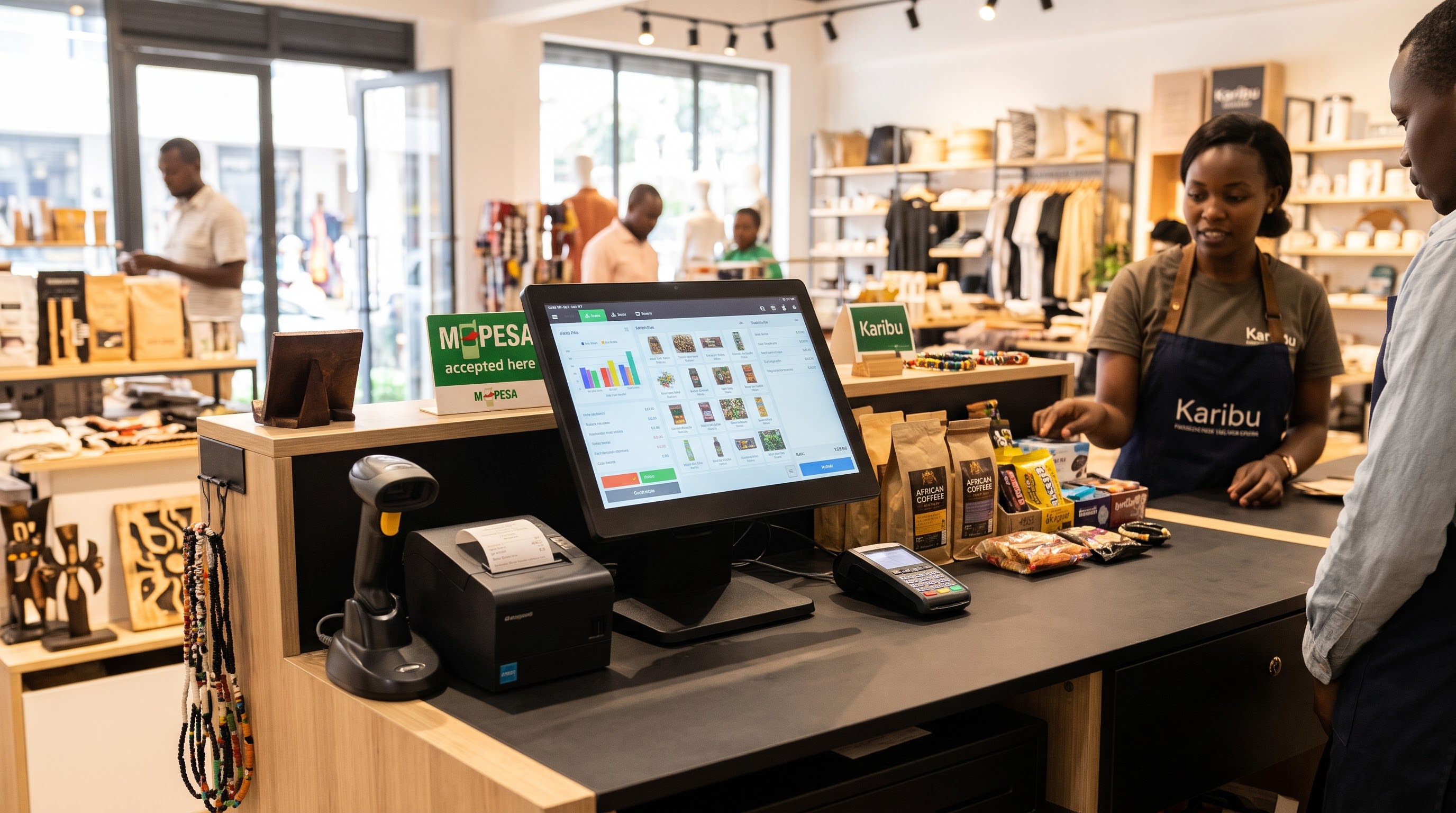
Finding the Best Point of Sale (POS) System in Kenya for 2026
If you run a retail shop, supermarket, hardware store, pharmacy, or restaurant in Kenya, choosing the right Point of Sale (POS) system is one of the most critical decisions you will make. A great POS system stops employee theft, eliminates checkout queues, keeps you compliant with the Kenya Revenue Authority (KRA eTIMS), and gives you complete visibility over your stock and cashflow.
However, many international POS solutions fail in Kenya because they lack native Safaricom M-Pesa integration, cannot operate during Safaricom fiber or mobile internet downtime, or charge crippling subscriptions in US Dollars. In this guide, we break down the Top 7 POS Systems in Kenya for 2026 based on features, reliability, pricing, and local payment automation.
The 5 Non-Negotiable Features Every Kenyan POS Must Have
- Instant M-Pesa STK Push & Till Reconciliation: Cashiers should never waste 2 minutes reading a customer's phone screen or risk accepting fake payment SMS screenshots. The POS must trigger direct STK Push prompts and automatically match Paybill/Till payments.
- True Hybrid (Online + Offline) Resilience: Internet cuts in Kenya are inevitable. If your POS stops ringing sales when the network goes down, you lose customers and revenue. A hybrid engine lets cashiers sell offline and automatically syncs data when reconnected.
- Real-Time KRA eTIMS Tax Compliance: Seamless electronic fiscal invoice transmission with scannable fiscal QR codes printed on physical customer receipts.
- WhatsApp Social Commerce & QR Catalogues: Turning tables, shop counters, or delivery flyers into instant digital storefronts where customers scan and order directly via WhatsApp.
- Affordable Local Kenyan Pricing (KES): Predictable billing in Kenya Shillings without sudden currency devaluation shocks.
In-Depth Comparison: Top 7 POS Systems in Kenya
1. 254POS (Overall Winner: Best for Retail, Supermarkets, Hardware & Hospitality)
Rating: 4.9/5 | Pricing: From KES 1,500/month
254POS has rapidly emerged as Kenya's leading next-generation cloud and offline POS system. Engineered specifically for local Kenyan commerce, it combines enterprise-grade inventory management with automated Safaricom M-Pesa STK push and KRA eTIMS compliance.
Key Highlights:
- True Hybrid Mode: Operates at 100% speed both online and offline during internet blackouts.
- KenyaPay M-Pesa Engine: Instant 1-second STK Push prompts and 1-click Paybill/Till C2B claim validation.
- QR WhatsApp Ordering: Customers scan unique table or counter QR codes to browse inventory and send pre-formatted orders to your WhatsApp.
- Multi-Branch Sync: Manage 10+ branches, stock transfers, and warehouse godowns from one central cloud dashboard.
- Client Affiliate Program: Earn recurring referral commissions by introducing fellow business owners to the platform.
2. Quickbooks POS (Legacy Option)
Rating: 3.5/5 | Pricing: Expensive One-Off License
Quickbooks has long been a staple in Kenyan accounting offices. However, Intuit officially discontinued Quickbooks POS desktop support. It also lacks native Safaricom Daraja STK push integration and requires expensive third-party plugins to meet KRA eTIMS requirements.
3. Lightspeed / Square
Rating: 3.8/5 | Pricing: $69 - $199/month (approx KES 9,000 - 26,000/month)
While popular in the US and Europe with sleek UI designs, Lightspeed and Square are not optimized for the Kenyan market. They charge heavy dollar subscriptions, lack direct integrations with Safaricom Paybill/Till numbers, and experience severe downtime when local internet fluctuates.
4. Loyverse POS
Rating: 3.9/5 | Pricing: Free base tier + Paid Add-ons ($5 - $25/feature)
Loyverse is popular among small coffee shops and boutique kiosks starting on a shoestring budget. While the free app is user-friendly, crucial features like employee management and advanced inventory require paid monthly add-ons. It also lacks built-in KRA eTIMS transmission.
5. Simba POS
Rating: 4.0/5 | Pricing: From KES 45,000 one-off
A established Kenyan local desktop POS software widely used in bars and restaurants. It offers solid local support, but the legacy architecture requires dedicated on-premise local servers and lacks modern real-time mobile cloud analytics for business owners on the go.
6. Paleah POS
Rating: 4.1/5 | Pricing: From KES 35,000 hardware bundles
Paleah POS is well-known across Nairobi for providing bundled hardware terminals (touchscreens, printers, and scanners) for supermarkets and liquor stores. It is reliable, though its user interface feels dated and it lacks native WhatsApp social catalogue ordering.
7. Microinvest POS
Rating: 3.9/5 | Pricing: Variable license tiers
A powerful European industrial retail software utilized by select mid-sized supermarkets. It handles high-volume barcode databases effectively, but its complex configuration requires dedicated IT administrators to maintain.
Summary Comparison Table
| POS System | M-Pesa STK & Till | KRA eTIMS Ready | Offline Mode | WhatsApp Catalogue | Price in KES |
|---|---|---|---|---|---|
| 254POS | ✓ Automated | ✓ Built-in | ✓ True Hybrid | ✓ Built-in | From KES 1,500/mo |
| Quickbooks POS | ✗ Needs Plugin | ✗ Needs Plugin | ✓ Desktop Only | ✗ No | KES 40,000+ |
| Loyverse | ✗ Manual | ✗ No | ✓ Basic | ✗ No | Free / Add-on $ |
| Simba POS | ✓ Optional | ✓ Available | ✓ Local LAN | ✗ No | KES 45,000+ |
| Paleah POS | ✓ Available | ✓ Available | ✓ Local | ✗ No | KES 35,000+ |
Final Verdict: Which POS Should You Choose?
If you need an affordable, modern, and completely reliable system built for the realities of doing business in Kenya, 254POS is the clear #1 choice in 2026. Its combination of instant M-Pesa STK push, true offline selling, KRA eTIMS compliance, and direct WhatsApp ordering delivers unbeatable value for retail shops, supermarkets, restaurants, and pharmacies.
Ready to Upgrade Your Business?
Book a 15-minute live demo or start your 14-day free trial today.
Start Free Trial Now →